Bernard Moore Flambe Lattice & Grape Vine Vase
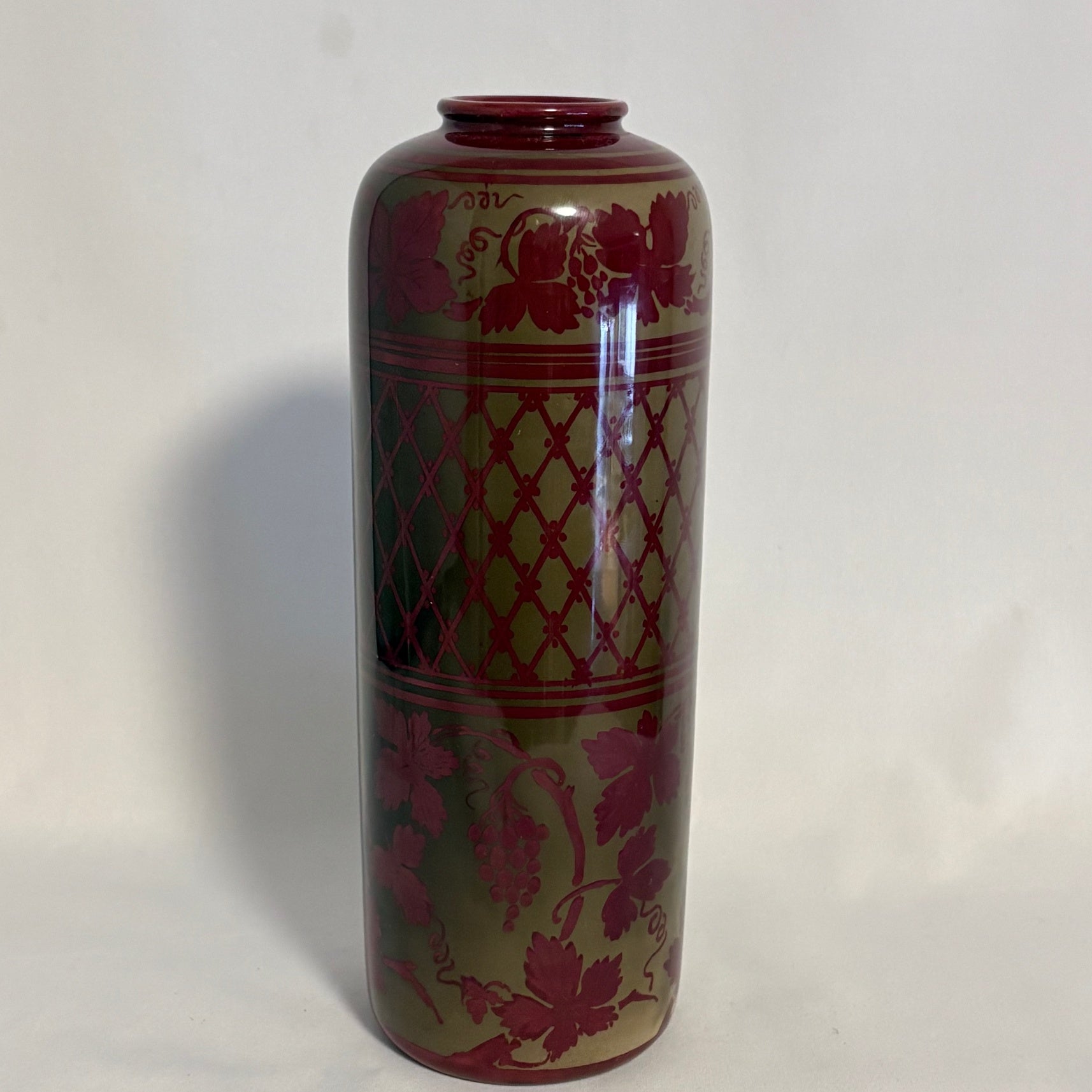
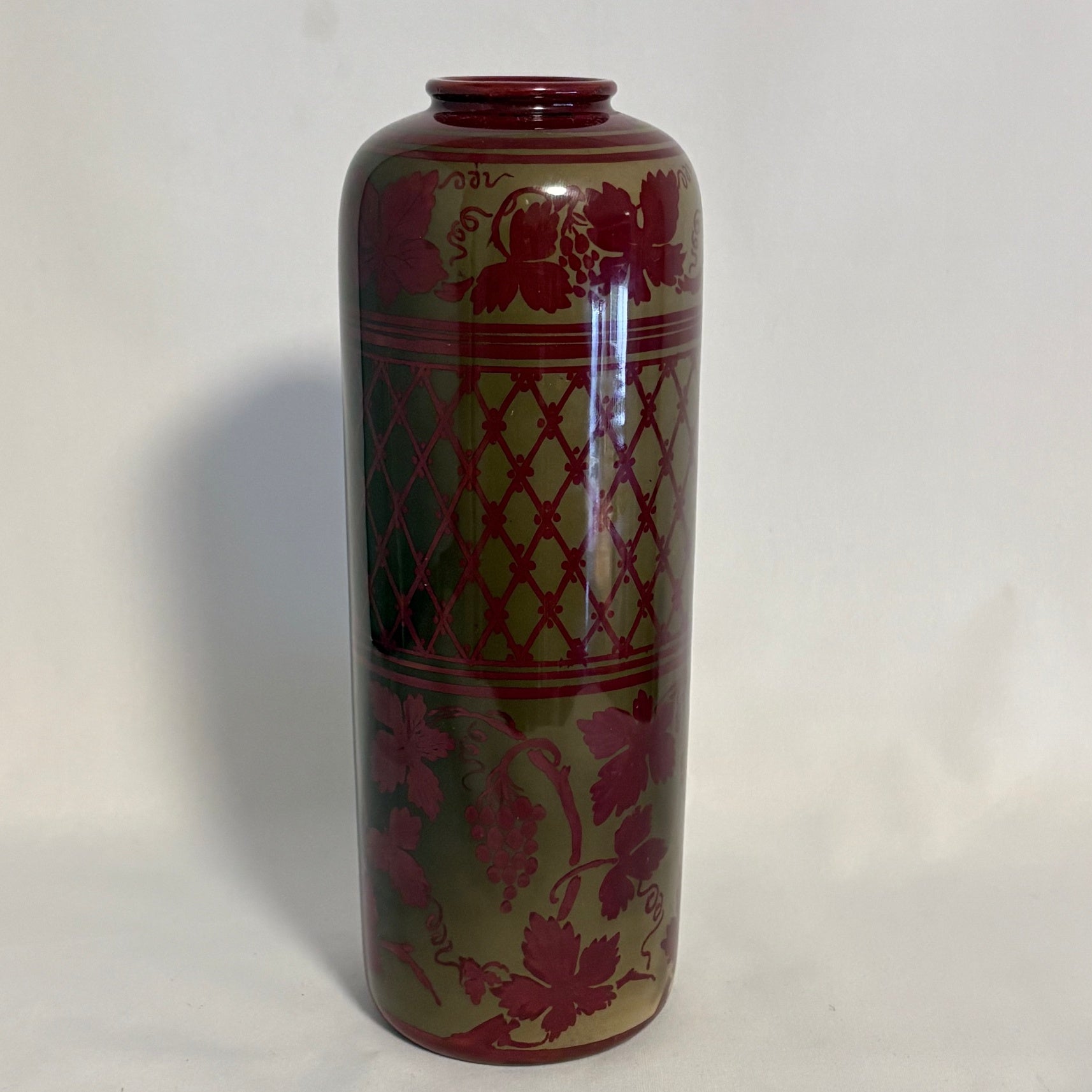
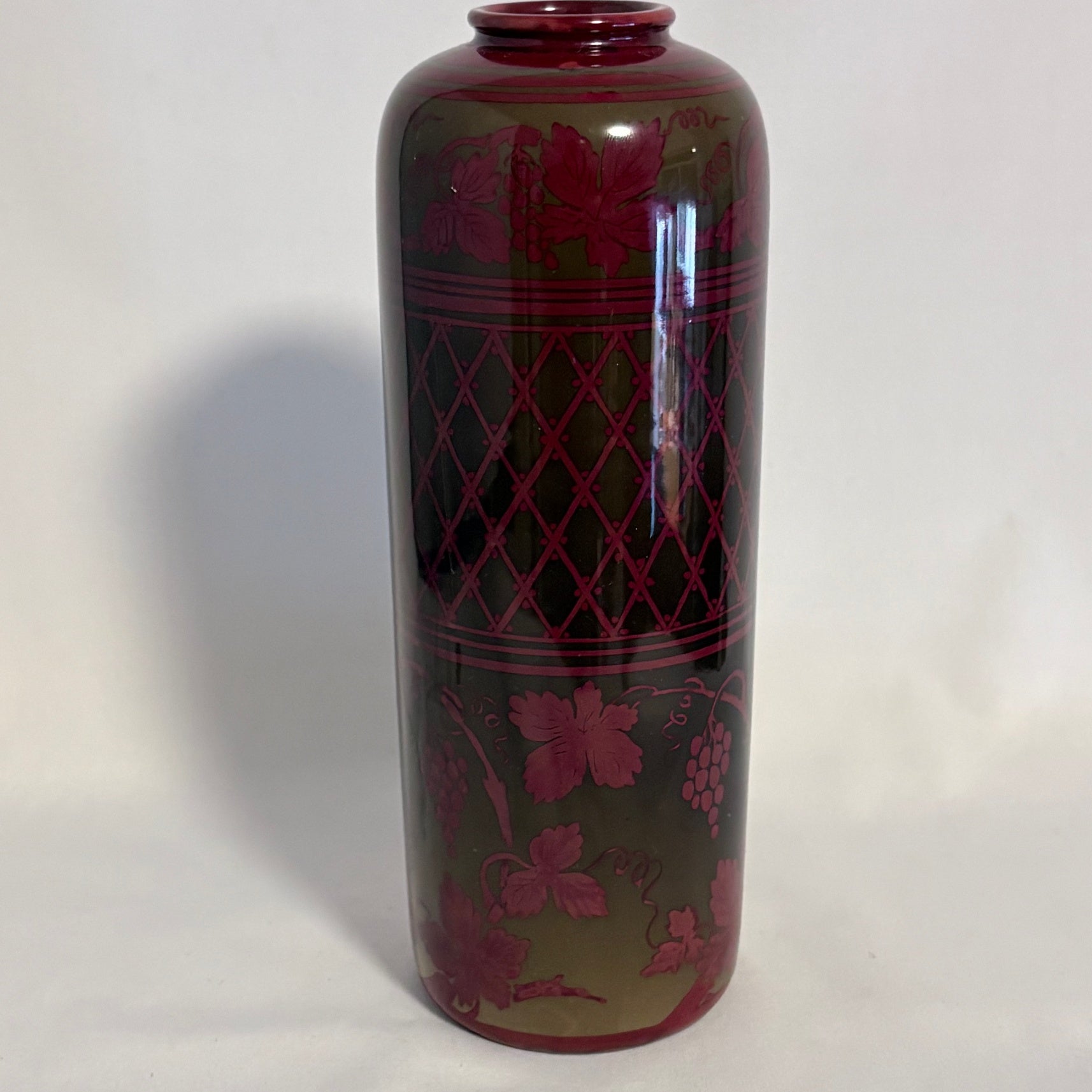
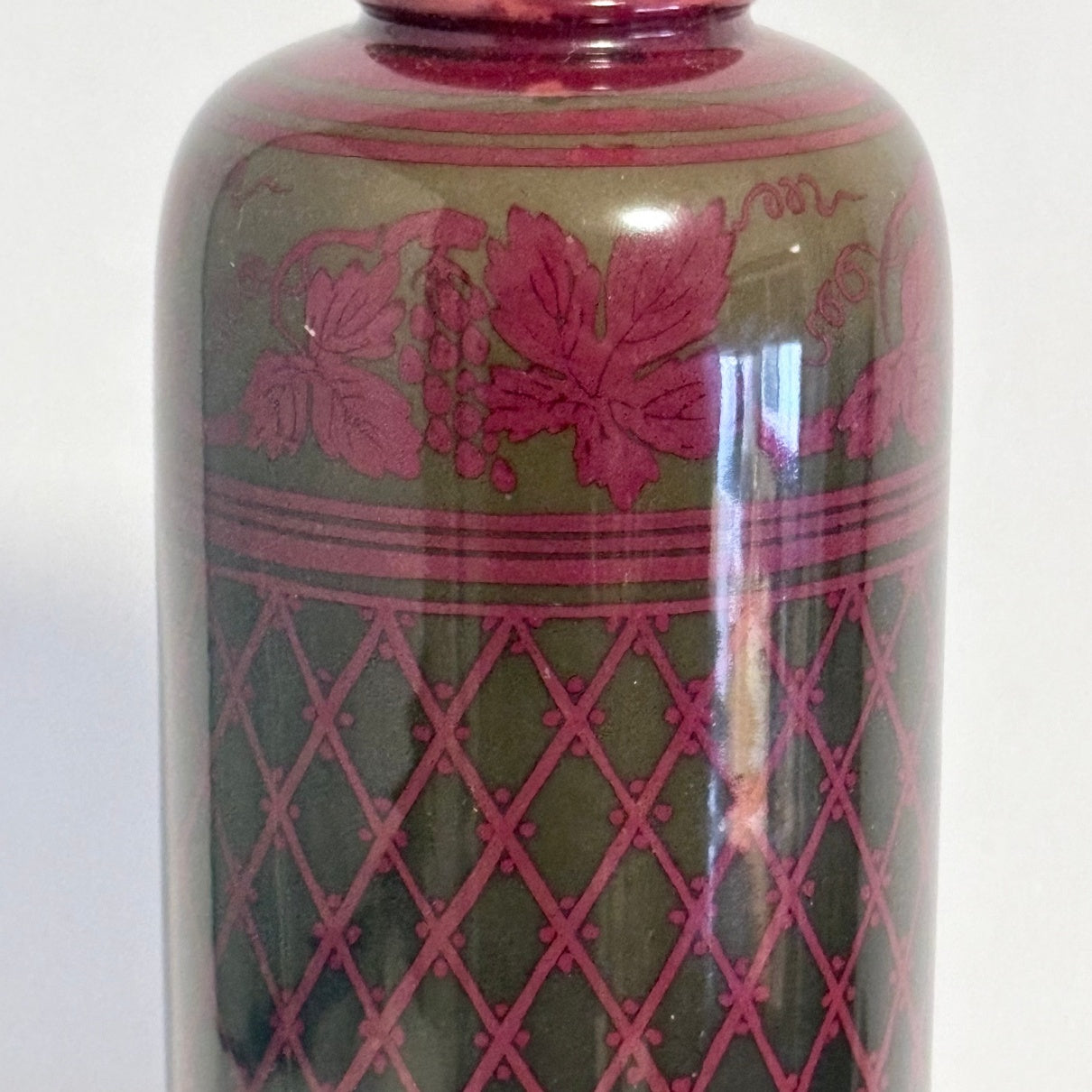
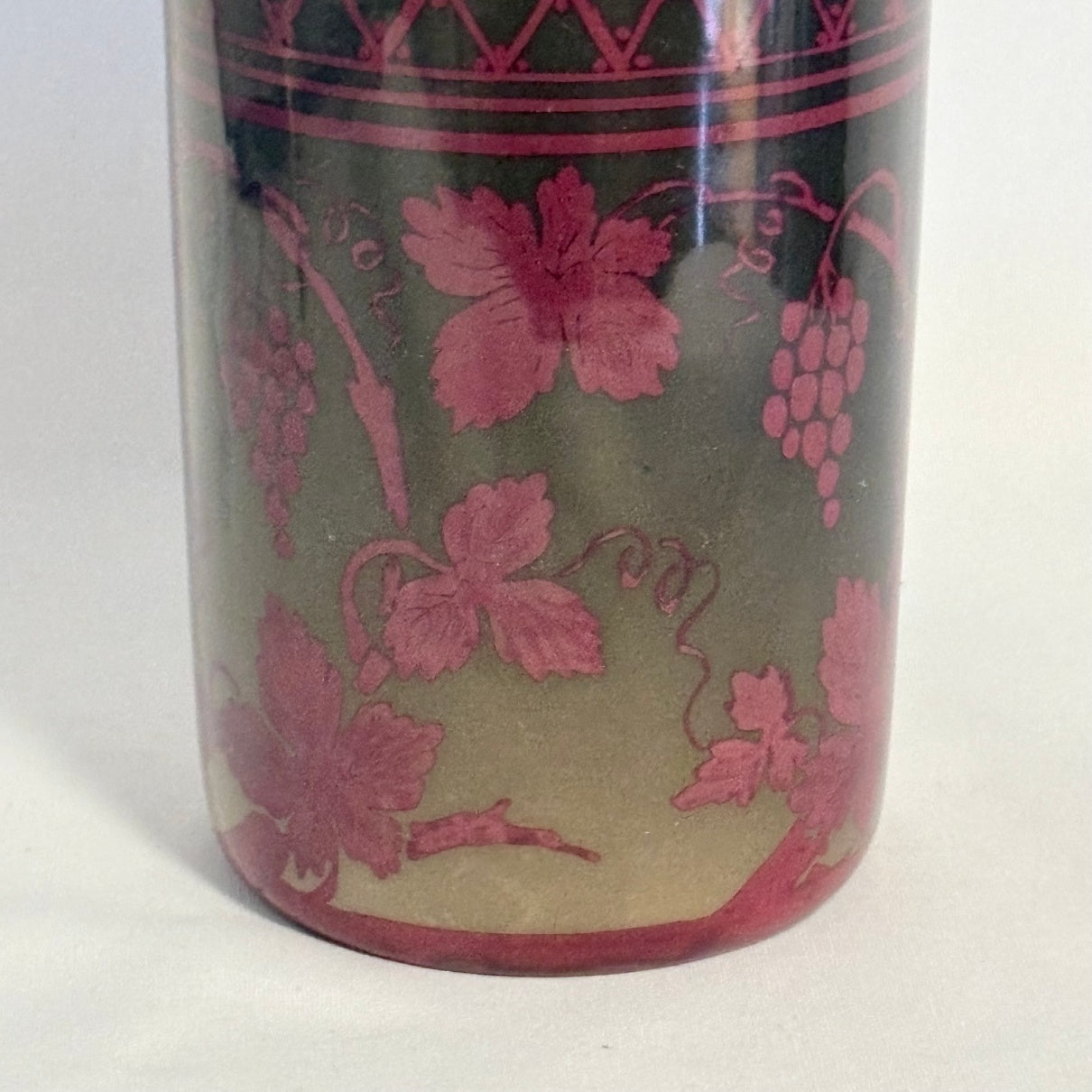
Bernard Moore flambe art pottery vase, circa 1905-1915, standing 10" tall. This exceptional example features lattice and grapevine decoration in a rich flambe glaze. The intricate grapevine motif showcases Moore's masterful combination of decorative artistry with his revolutionary glaze chemistry, creating depth and movement across the vase surface.
Bernard Moore (1850-1935) was one of Britain's most innovative ceramic chemists and art potters, renowned for perfecting the notoriously difficult flambe glaze technique. After running the family business Moore Bros. from 1867-1905, Bernard established his own studio at Wolfe Street in Stoke-on-Trent where he produced experimental art pottery with assistant decorators. His flambe glazes were created using metallic oxides (primarily copper and iron) fired at extreme temperatures up to 1500°C in a reducing atmosphere, producing unpredictable ranges of reds, purples, blues, and greens. This Chinese-inspired technique, also called sang-de-boeuf or "oxblood," had been perfected during China's Ming and Qing dynasties but was extraordinarily challenging to replicate in the West. Moore's extensive knowledge of glaze chemistry made him a highly respected consultant to the ceramics industry, and he was elected president of the English Ceramic Society in 1902. His expertise was crucial to Royal Doulton's commercial development of flambe glazes, launched at the St. Louis Exhibition in 1904.
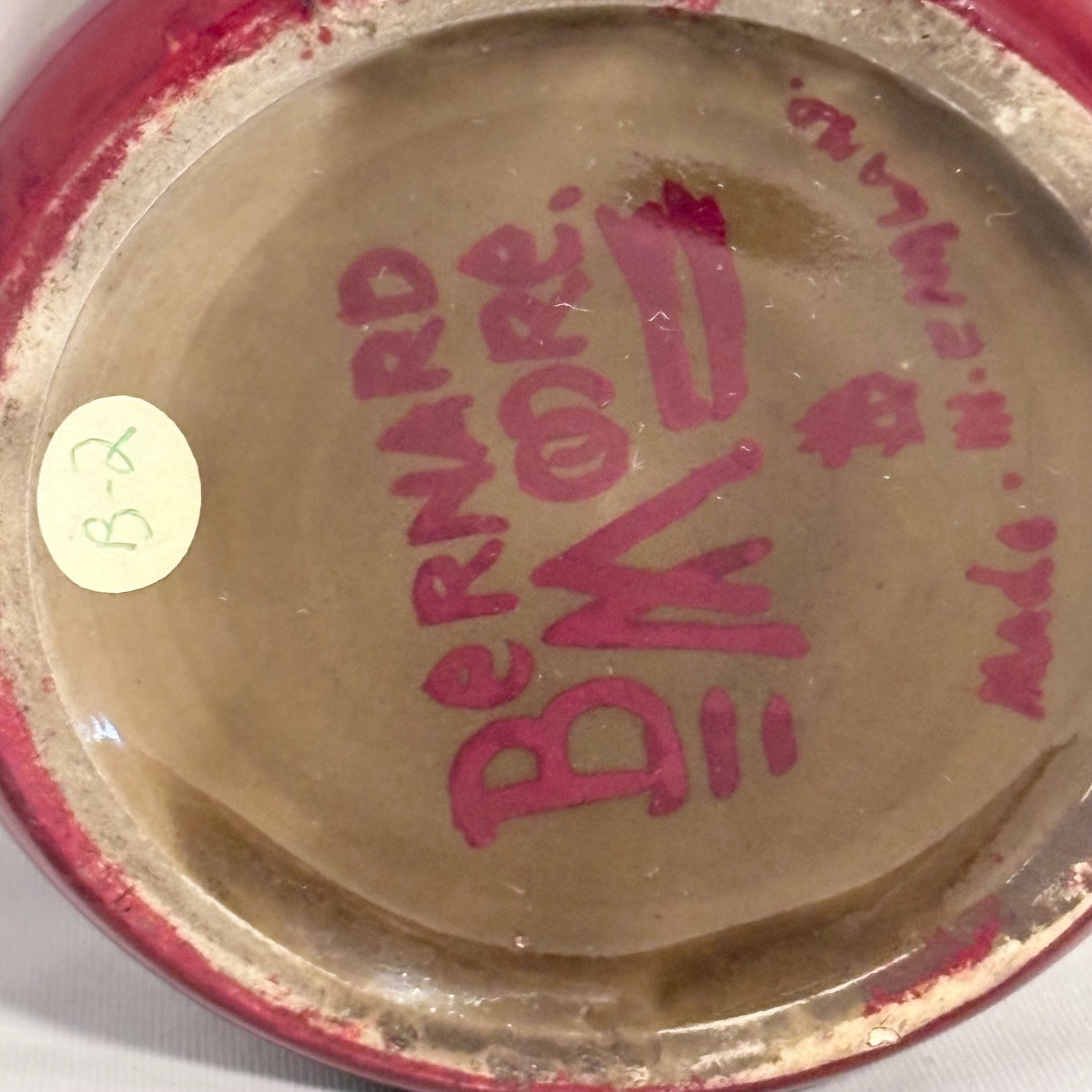
This example displays the characteristic Bernard Moore signature to the base, authenticating this piece as genuine studio production. The flambe glaze shows the distinctive transmutation of colors achieved through Moore's mastery of firing techniques, while the lattice and grapevine decoration demonstrates the refined hand-painting executed by his skilled assistant decorators. All original glaze and decoration remain intact.
Moore's art pottery represents a pivotal moment in the British studio pottery movement. Along with William Howson Taylor of Ruskin Pottery and William and Joseph Burton of Pilkington's Royal Lancastrian, Moore was recognized as a founder of the studio pottery movement that revolutionized British ceramics. His works were exhibited internationally and acquired by major museums including the Victoria & Albert Museum and British Museum. The studio closed in 1915, making pieces from this period increasingly rare and sought after by collectors of Arts & Crafts and art pottery. Moore continued as a ceramic consultant until his death in 1935, but studio production pieces represent his most creative and experimental work.
Perfect for collectors of British art pottery, Arts & Crafts decorative arts, and those who appreciate museum-quality examples of early 20th century ceramic innovation. Fully insured shipping across Canada with tracking.
Choose options
Shipping $35.00 Flat Rate Across Canada
FREE Shipping for all Orders over $1000.00