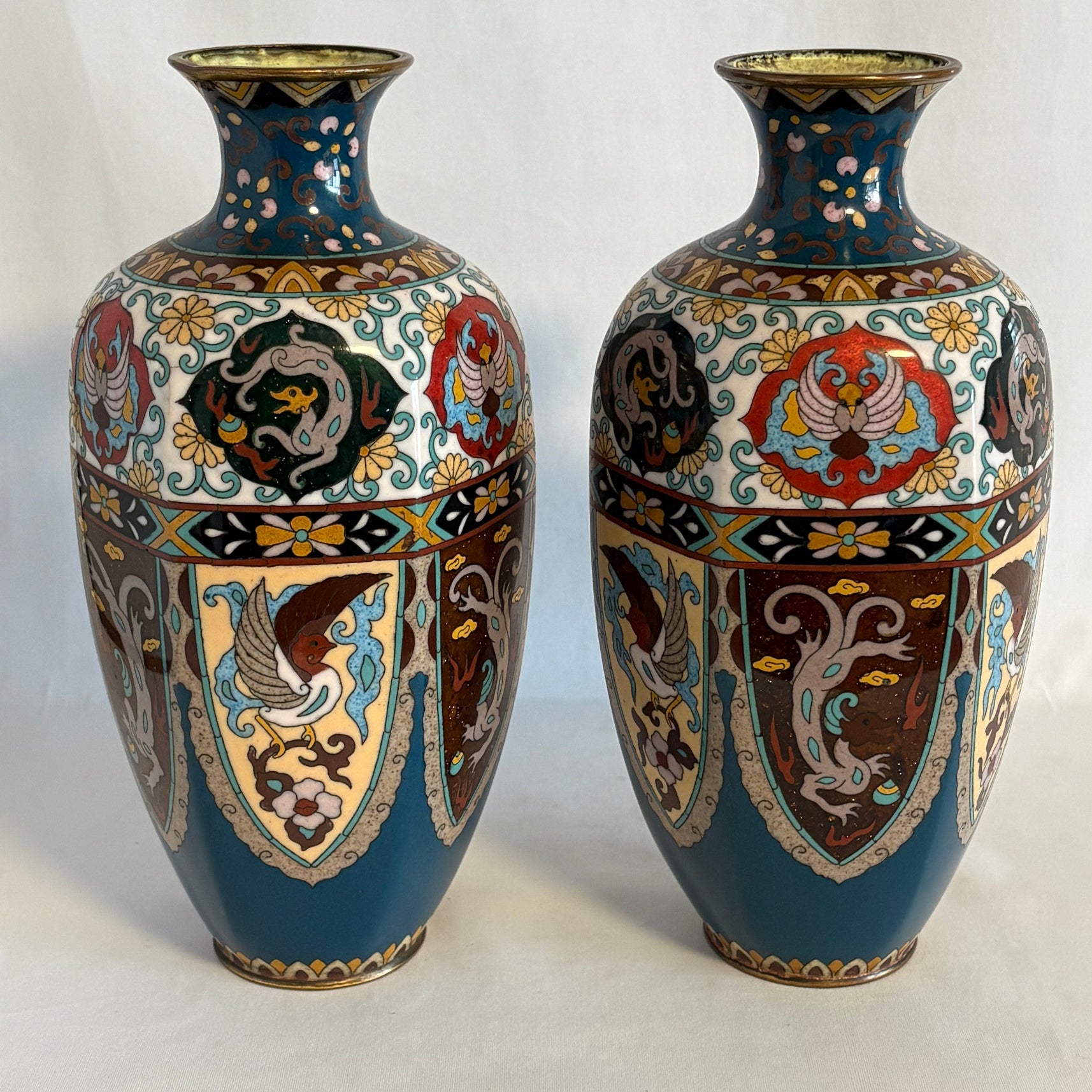
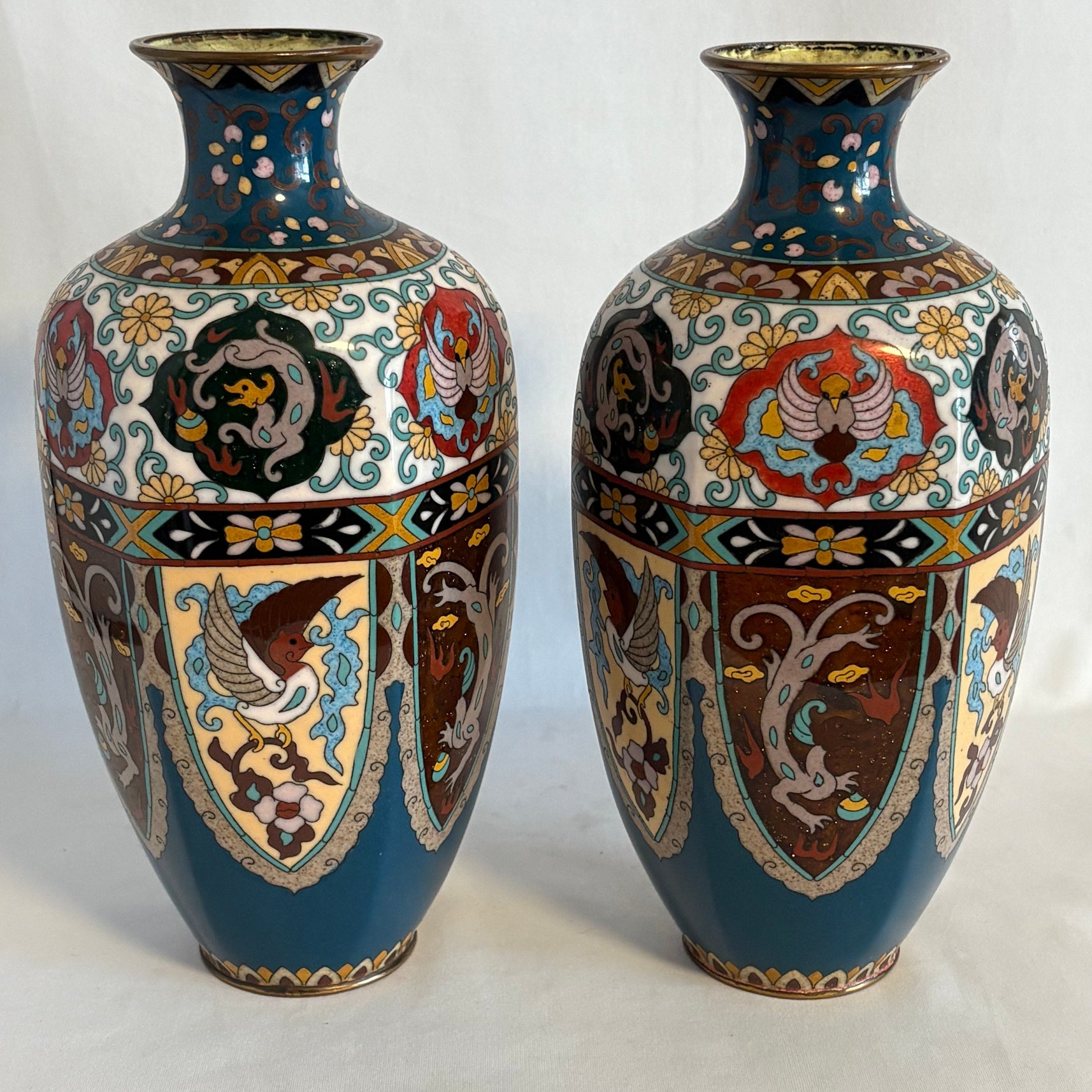

Pair of Early Japanese Cloisonné Vases -10" tall
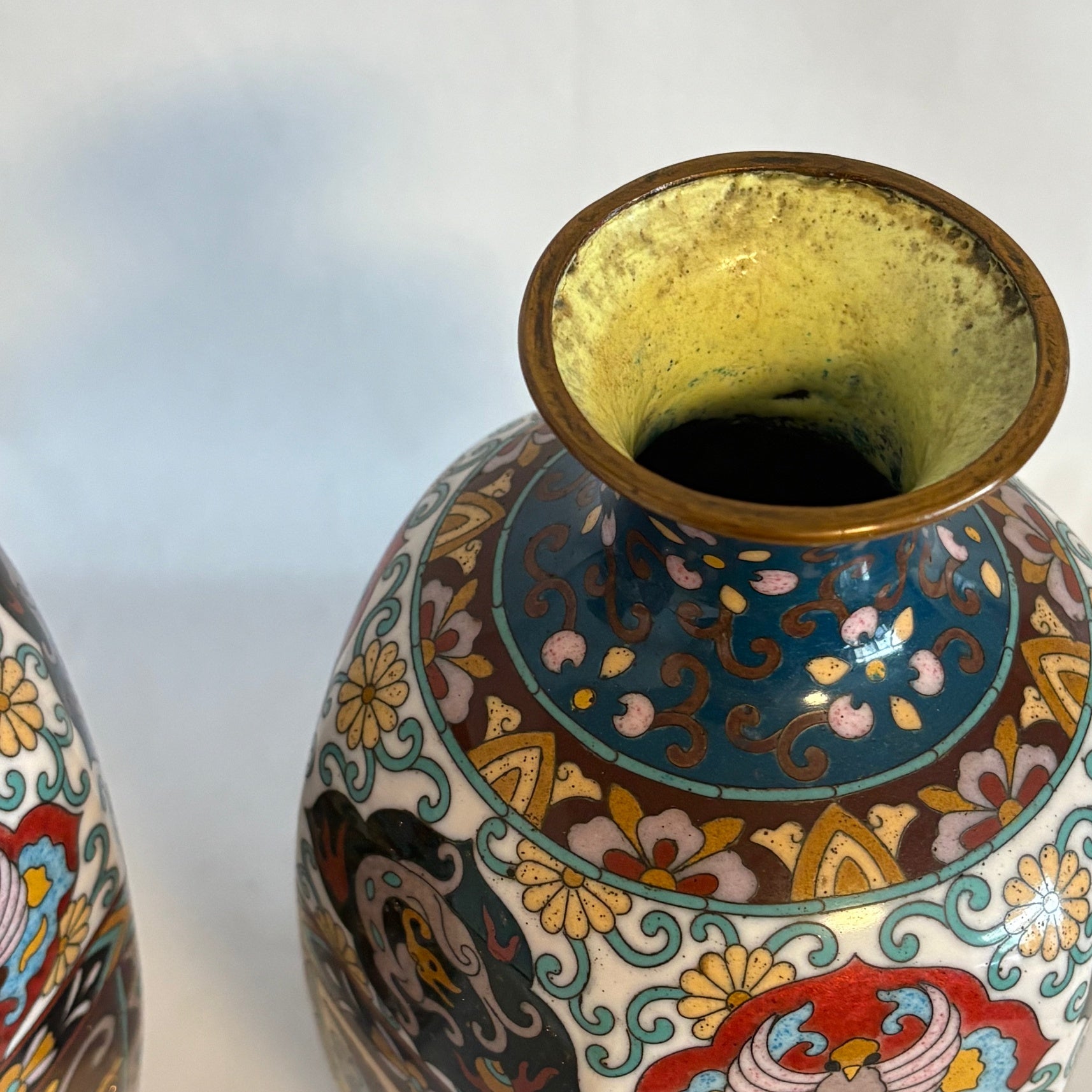
Pair of Early Japanese Cloisonné Vases, standing 10 inches (25.4cm) tall, dating to the Meiji period, circa 1880-1910. These vases showcase the exceptional craftsmanship that defined Japan's "Golden Age" of cloisonné production when Japanese artists transformed an ancient technique into one of the finest decorative arts ever produced. Decorated with intricate silver or copper wire designs forming compartments filled with jewel-like polychrome enamels, each vase displays the characteristic glassy, highly polished surface that distinguishes Japanese cloisonné from all other enamel work worldwide.
Japanese cloisonné—known as shippō or "seven treasures"—was essentially reinvented in 1838 by Kaji Tsunekichi, who studied a Dutch enamel vessel to understand the technique. However, it wasn't until the Meiji period (1868-1912) that Japanese cloisonné reached unprecedented artistic heights. As Japan opened to the West following centuries of isolation, the Meiji government actively promoted decorative arts for export. Cloisonné became one of Japan's most successful international art forms, winning medals at world expositions in Paris (1867, 1889, 1900), Philadelphia (1876), Chicago (1893), and St. Louis (1904)
The cloisonné process involves applying thin metal wires (cloisons) to a copper or brass base to form compartments, which are then filled with powdered glass enamels and fired at high temperatures. As the glass shrinks during firing, cells are refilled and refired multiple times until level with the wire. After final firing, pieces are ground down and polished to achieve the characteristic glassy surface. Japanese artists used silver wire (rather than brass) and developed transparent and translucent enamels allowing subtle gradations—Namikawa Yasuyuki reportedly used fifteen different enamel shades for a single color transition. Advanced techniques included plique-à-jour (translucent cloisonné without backing), ginbari(clear enamel over stippled silver), and shōtai shippō (translucent effects).
Japanese cloisonné differs dramatically from Chinese examples in several ways. Japanese pieces feature finely ground, highly polished surfaces creating jewel-like transparency, while Chinese cloisonné remains somewhat matte. Japanese artists used realistic natural motifs—birds, flowers, landscapes—rendered with painting-like detail, whereas Chinese designs favored stylized symbols like dragons and lotus scrolls. Japanese work employed single background colors to create poetic mood and contrast, while Chinese pieces filled backgrounds with turquoise blue patterns. Most significantly, almost all Japanese cloisonné from the Golden Age bears maker's marks on the base, unlike Chinese examples.
This pair is in Mint condition, with no chips, cracks or repairs.
Choose options
Shipping $35.00 Flat Rate Across Canada
FREE Shipping for all Orders over $1000.00