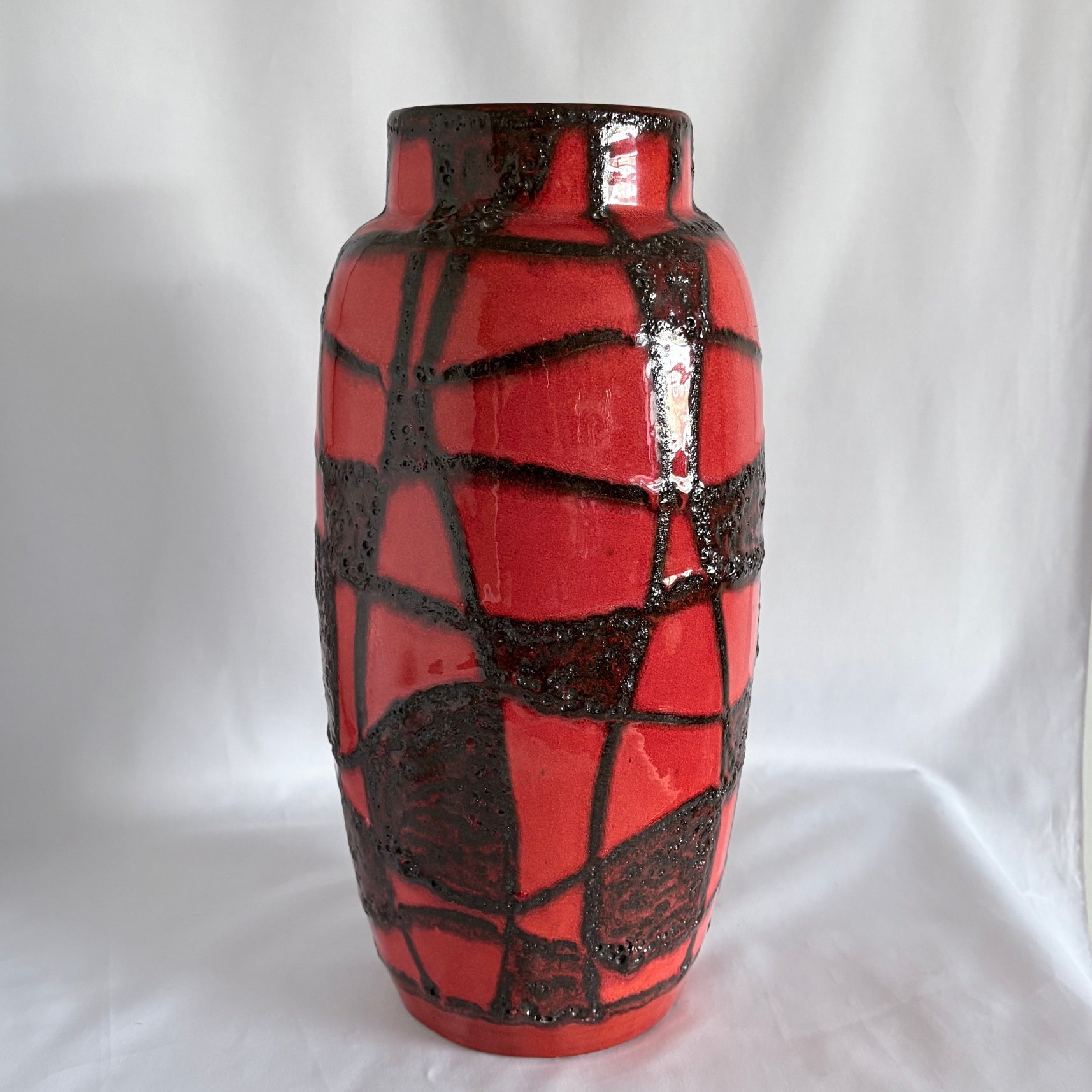
West German Art Pottery Spider Vase 38cm
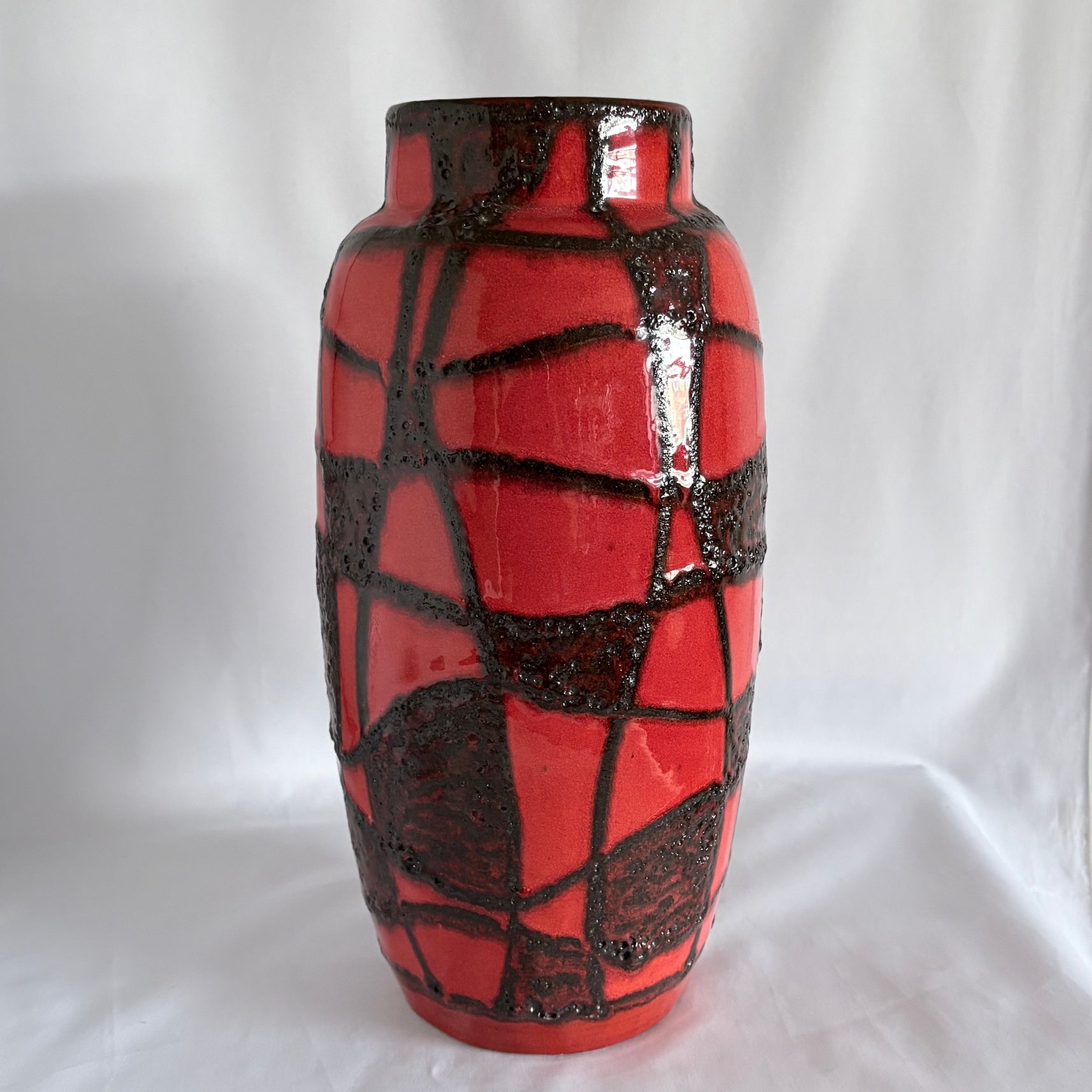
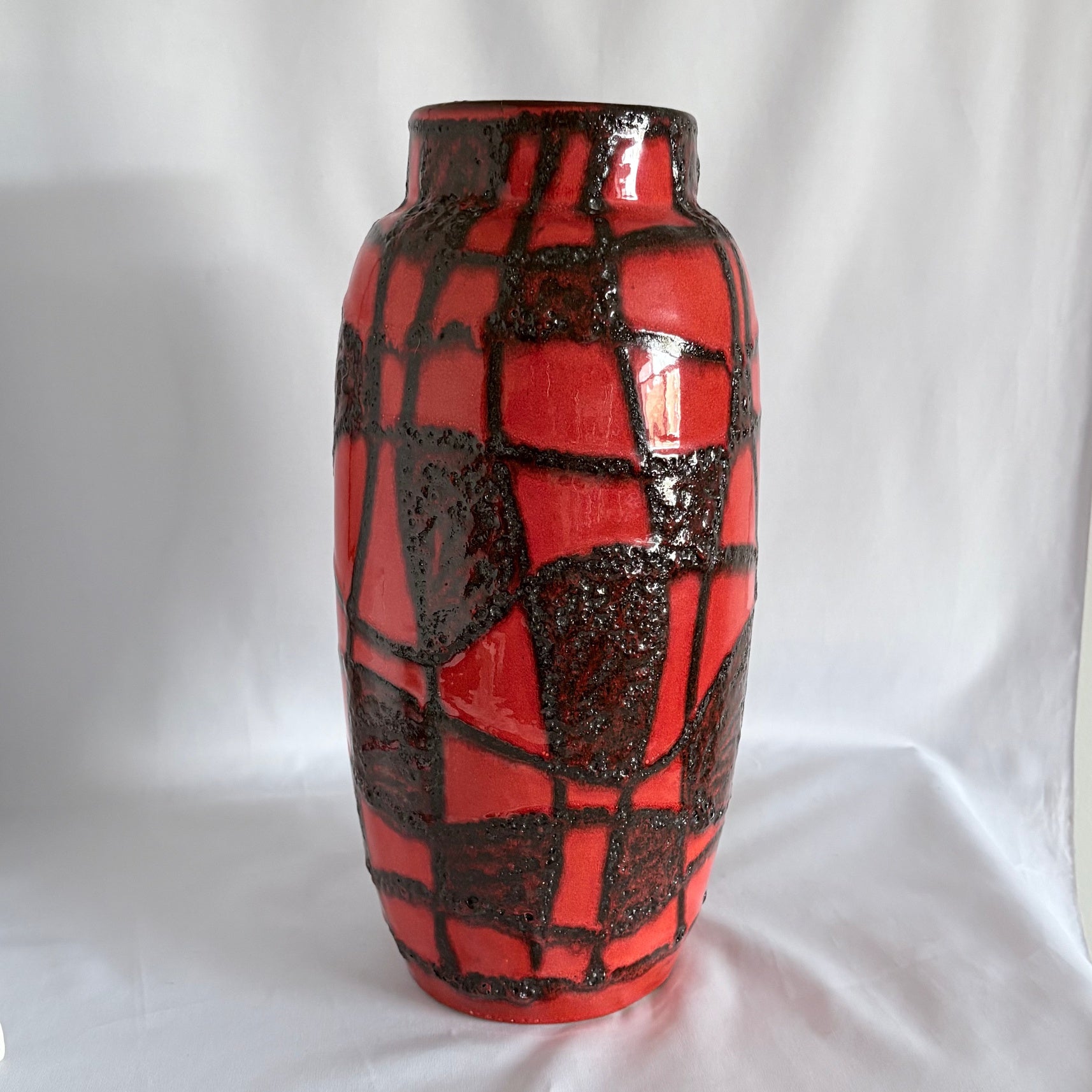
West German Art Pottery Spider Pattern Vase, standing an impressive 38cm (15 inches) tall. This striking vase features the highly sought-after spider web pattern in the classic orange-red and black colorway that exemplifies West German ceramics of the 1960s and early 1970s. The dramatic "Fat Lava" glaze creates a thick, textured surface with bold contrasting colors that appear to flow across the white clay body like molten lava—capturing the experimental spirit of mid-century modern European design.
This vase was produced during West Germany's golden age of ceramics (1949-1990), when over 100 pottery manufacturers competed to create innovative decorative pieces that pushed the boundaries of form, glaze, and color. The post-war era saw German ceramicists embrace bold, expressive designs that broke dramatically from traditional pottery aesthetics. These pieces concentrated on single decorative items—vases, jugs, and bowls—rather than tableware sets, allowing factories to experiment with an extraordinary variety of glaze effects and sculptural forms.
The spider web pattern, sometimes called "Harlequin Spider Web Decor," represents one of the most distinctive and collectible designs from this period. The pattern features geometric web-like lines overlaid with thick Fat Lava glazes in vibrant orange-red contrasted against glossy black. The term "Fat Lava" itself has an amusing origin—it emerged from German eBay sellers in the 1990s who mistranslated "dick" (meaning "thick" in German) as "fat" when describing these unusually thick, textured glazes. The name stuck and became the popular collector's term after the landmark 2006 exhibition "Fat Lava: West German Ceramics of the 60s & 70s" curated by Graham Cooley at the King's Lynn Arts Centre.
Major manufacturers during this era included Scheurich Keramik (the largest and most prolific), Bay, Carstens, Dümler & Breiden, Ruscha, Ceramano, Roth, ES, and Otto Keramik. Scheurich, founded in 1928 by Alois Scheurich and his cousin Fridolin Greulich, began as a wholesale glass and porcelain business before starting their own ceramic production in 1948. The company's success stemmed from their production strategy developed by celebrated designer Heinz Siery, who joined in 1955: create simple, harmonious forms using the golden ratio, then decorate them in dozens of different glaze combinations. Their most successful vase model, form 271-22 designed by Siery in 1959, was produced in over 250 different glaze variations and remained fashionable through the 1970s.
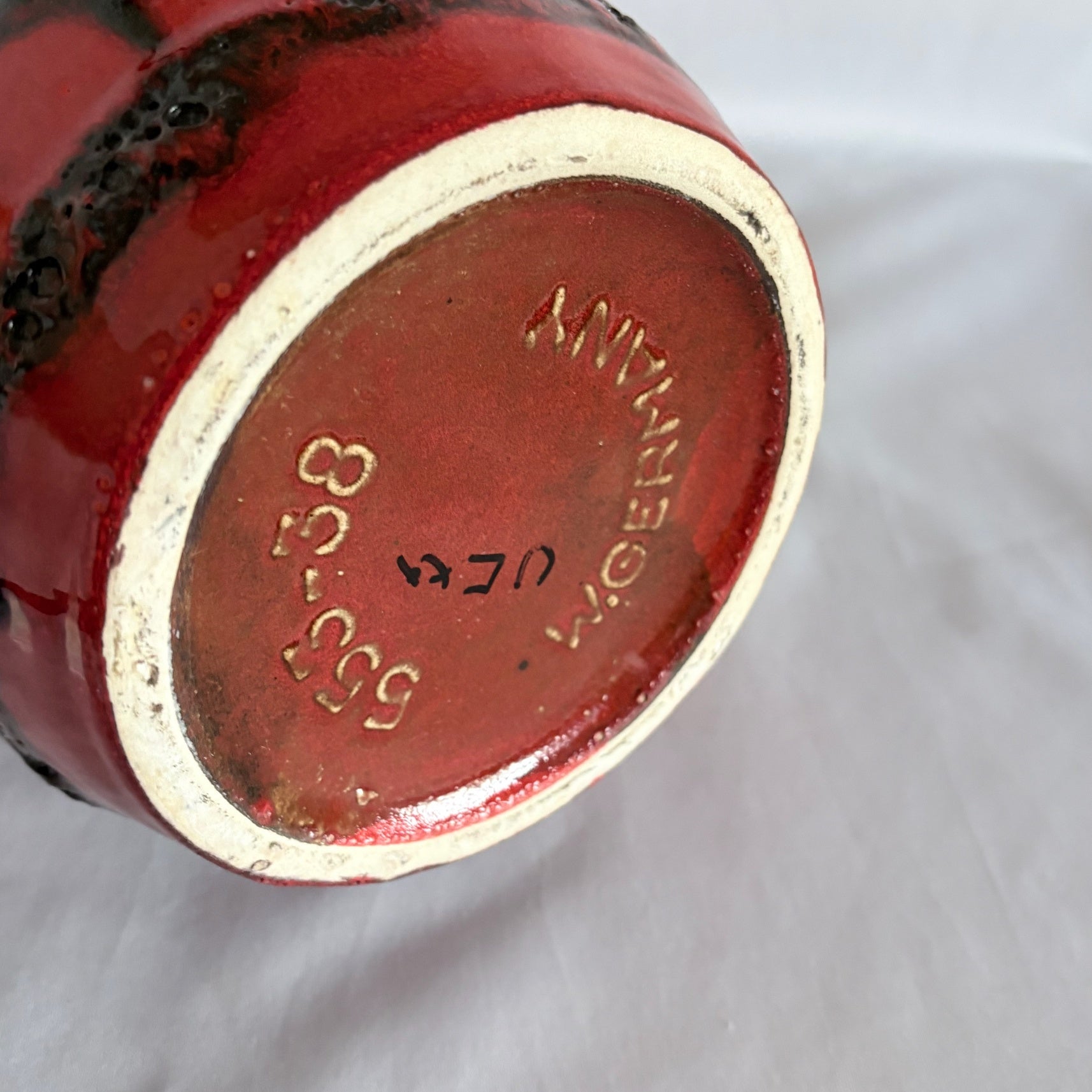
Scheurich used white clay exclusively and fired all pieces at 1000 degrees Celsius, with a minimum production run of 500 pieces for each design. Pieces were marked on the base with embossed model numbers consisting of three digits (the form number) followed by the height in centimeters—for example, 231-15 or 200-23. The spider web pattern appeared on various Scheurich forms during the late 1960s and early 1970s, typically in the 15cm to 28cm range. At 38cm, this example represents a larger size that is considerably more difficult to find and more dramatic in presentation.
The thick Fat Lava glazes were created using various metallic oxides applied in layers, with the final firing producing the characteristic flowing, bubbled, and textured surface. Colors were bold and vibrant—fiery reds, oranges, browns, blacks, cobalt blues, and greens—often in striking contrasts. The glazes were applied by flowing or brushing rather than precise painting, giving each piece organic variation. Other famous Scheurich decor styles included "Kaskade" (introduced 1963, one of their earliest fat lava glazes), "Fabiola" (brown-red overflow glaze), "Jura" (fossil/snail motif), "Amsterdam" (onion/tulip bulb motif), "Lora" (zigzag pattern with bubbly lava), and "Inka" (geometric relief patterns).
West German pottery went dramatically out of fashion in the 1980s—many pieces were discarded or relegated to charity shops. Mark Hill, who co-curated the 2006 exhibition and wrote the accompanying catalog, recalled that his partner's German mother laughed at him for collecting "this rubbish" that she remembered from the 1960s and 70s. The 2006 exhibition changed everything. Over 500 ceramics were displayed, attracting 3,500+ visitors from as far as Canada and the United States. The event crystallized the market, and Mark Hill's Fat Lava catalog (now in its fourth edition with thousands of copies sold) provided collectors with crucial information about makers, designers, glazes, and rarity. Since then, West German pottery has gone global, with dedicated collectors, specialist dealers, and museum exhibitions worldwide. A Japanese edition of the Fat Lava book was published in 2021, further expanding international appreciation.
Today, West German ceramics are recognized as important examples of mid-century modern design. Values range from modest sums for common pieces to several hundred pounds for rare forms, large sizes, unusual glazes, and sought-after patterns like the spider web design. The largest Scheurich floor vases, particularly those over 40cm tall, can command premium prices due to their rarity and visual impact. Many pieces have survived domestic accidents—over-enthusiastic hoovering and toppling were common hazards for these tall, sculptural vases—making pristine examples increasingly valuable.
This 38cm spider web vase embodies everything collectors prize in West German pottery: bold colors, striking pattern, substantial size, thick textured glaze, and the experimental spirit of 1960s-70s European design. Perfect for collectors of mid-century modern ceramics, Fat Lava enthusiasts, and those who appreciate decorative arts that capture a specific moment in post-war design history. Whether displayed as a statement piece or used for dramatic dried flower arrangements, this vase brings instant retro character and visual punch to any space.
This example is in mint condition. The original Fat Lava glaze remains intact with its characteristic thick texture and vibrant coloration. Fully insured shipping across Canada with tracking.
Choose options
Shipping $35.00 Flat Rate Across Canada
FREE Shipping for all Orders over $1000.00